How to Tell If a Used Book Is Worth Buying (Our Actual Criteria)
Two Moms & A Bookshop · August 11, 2026
Here's an uncomfortable truth about the used book industry: "Good," "Very Good," and "Like New" mean whatever the seller wants them to mean.
There's no enforced standard. One store's "Very Good" is another store's "trash we're trying to unload." That's why people get burned buying used books online — you're at the mercy of a seller's optimism.
We've made it a point to run tighter than that. Here's what we actually look at on every single book, and what you should look at too if you're shopping used anywhere.
The spine
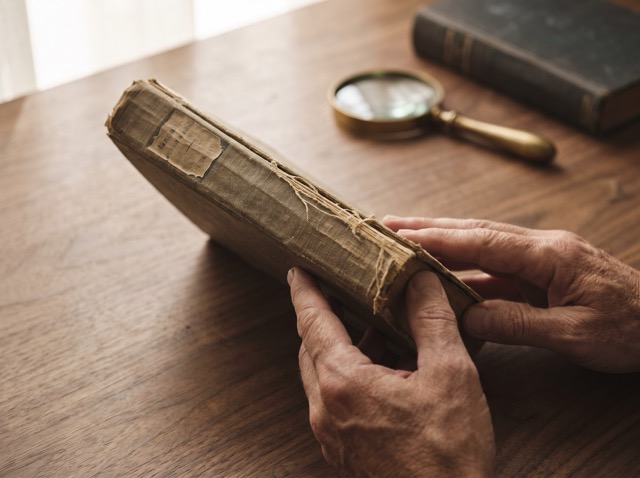
The spine tells you the truth about how a book has been handled. A cracked spine means it's been forced open past its comfort point, usually more than once. Cracks catch dirt and eventually split. A book with a badly cracked spine is on borrowed time.
What we check: no visible cracks, no white creases running across the spine text, no fabric or glue exposed. Small softening on paperbacks is normal — a spine that looks like it was folded backwards is not.
The cover
Cover wear happens fast, especially on paperbacks. Corner dings, edge softening, and sun-faded spines are common. Some of that is character. Some of it is a book that's going to fall apart in your hands.
What we check: covers should be flat (not curled), corners should be mostly intact, no significant scuffing, no sun-fade so bad that the title's hard to read.
Water damage
This one is a hard no for us. Water damage causes pages to warp, ripple, and eventually mold. Even if a water-damaged book looks fine now, it will keep degrading. You can usually spot it by the pages having a wavy edge instead of a flat one, or by a musty smell.
What we check: dry, flat pages. If a book has ever gotten wet, it doesn't make our shelves.
Writing, highlighting, and markings inside
This is where used bookstores play games. "Some markings" can mean anything from a discreet name on the flyleaf to entire chapters highlighted in three colors of neon. We flip every book. If there's writing or highlighting, we either don't list it or we call it out clearly.
Real talk: we recently had a customer let us know a book they gifted had writing inside we'd missed. It was a genuine miss, and we made it right. That's the standard — if something slips through, we own it. More on that in our FAQ.
Completeness
Missing pages, torn dust jackets, missing maps in fantasy novels, missing plates in art books — these are the things most sellers won't mention. We flip through. If a page is torn or missing, it doesn't get listed.
The bonus stuff: signed copies and special editions
This is where used book shopping gets fun. Signed copies, Book of the Month editions, first printings, special covers, boxed editions — these show up in used inventory more often than people think, and they're often priced the same as a regular used copy. When we get one, we flag it in the listing. Score one for you.
What you should do when you're shopping used
Whether you're on our site or anywhere else, run through this checklist. Ask the seller about writing inside. Ask about the spine. Ask if it's been in a garage or basement. If a listing description is vague ("used, good condition") and there aren't clear photos, ask for photos. A legitimate seller will send them.
Or, honestly? Shop where the seller has already done this work. Every book on our site has already been through this process. And if you want first crack at what's coming in, our new arrivals update often.